


Attention deficit hyperactivity disorder (ADHD) affects millions of children worldwide, hindering their ability to concentrate, control impulses, and regulate emotions. However, in recent years, video games have emerged as an innovative tool for developing cognitive and social-emotional skills in children with ADHD.
In this blog, we explore how the use of video games can benefit this population, integrating recent findings from the research entitled “Brain Waves and Learning in Students with ADHD: Impact of Educational Video Games vs. Traditional Methods.” The research was conducted in collaboration with Jaume I University in Castellón and a group of researchers led by Cristina Rebollo using the Kokoro Kids app.
Download Kokoro Kids and discover its benefits.

General benefits of video games for children with ADHD
Video games offer an immersive experience that can help capture and maintain the attention of children with ADHD, thanks to their interactive design and immediate feedback. In addition, their ability to customize the level of difficulty allows players to face challenges tailored to their abilities, promoting motivation and reducing frustration.
On the other hand, several studies have shown that video games can stimulate areas of the brain associated with working memory, sustained attention, and self-control, skills that are often compromised in children with ADHD.

1. Learning with video games versus traditional methods
In our experiment, we compared video game-based learning, using the Kokoro Kids app, with traditional methods in a group of children. The results showed that video games not only increase motivation, but also improve information retention and problem-solving skills. For children with ADHD, these aspects are key, as they often have difficulty maintaining attention in linear and repetitive activities typical of traditional methods.
“Learning through video games offers a more dynamic and adaptive experience, especially benefiting children with attention difficulties such as ADHD,” according to data extracted from the study.
Analysis of knowledge acquisition in traditional learning vs. GBL
- Evaluation of learning in both methods:
- Both traditional learning and game-based learning (GBL) proved to be effective for knowledge acquisition.
- Significant improvements in post-test scores were observed with both methods.
- Advantage of GBL:
- GBL showed a tendency to generate greater progress in a shorter period of time, standing out as an efficient strategy for many participants.
- The game “Fly the Solar System” was particularly effective in increasing knowledge acquisition.
- Importance of personalization:
- Although GBL stood out for its speed and effectiveness, traditional learning also produced notable improvements.
- This finding highlights that no method is universally superior, underscoring the need to tailor educational strategies to each student’s characteristics, preferences, and strengths.
- Practical application: Combining both methods may be an ideal strategy, leveraging the strengths of ABJ for rapid learning and the advantages of the traditional method for consolidating knowledge.

2. Measuring the cognitive impact of video games
Analysis of brain waves during gameplay revealed how video games activate specific regions of the brain related to attention and working memory. In children with ADHD, this activation is essential for improving impulse control and the ability to focus attention on a specific task.
Furthermore, when comparing brain waves during traditional activities and while playing video games, we observed greater activation during gaming sessions. This suggests that video games can be an effective tool for training key executive functions in children with ADHD.
Validation of the effectiveness of 2D video games in ADHD
- ABJ efficiency:
- Children learned faster with ABJ, showing better results in attention and mental effort compared to traditional methods.
- Brain waves:
- Significantly greater attention during ABJ.
- Slightly greater relaxation in traditional methods, but ABJ generates greater cognitive arousal.
- Familiarity varies by child, reinforcing the need for personalization.
- Practical application:
- Combining ABJ and traditional learning maximizes results.
- Games such as Fly the Solar System stand out as effective tools.

3. 2D versus 3D: which format is more effective
Within the experiment, we also compared 2D and 3D video games. The results indicated that 3D environments, being more immersive, favor skills such as spatial orientation and complex problem solving. On the other hand, 2D video games were more effective in tasks requiring focused attention and quick reactions, which could be especially useful in designing interventions tailored to the different needs of children with ADHD.
“The design of the virtual environment has a direct impact on the cognitive areas that are activated during gameplay,” the analysis highlights.
Key differences between 2D and 3D:
- Higher attention, relaxation, and appreciation in 2D.
- 3D requires more mental effort, which can be positive for developing certain skills.
- Lower familiarity in 3D, indicating that its complexity may be an initial barrier.
Practical application:
- Ideal for including 3D games in contexts where overcoming cognitive challenges is the goal.
- 2D games are more effective at capturing attention and relaxing, making them preferable in the early stages of learning.

4. Educational video games: a personalized approach
We also analyzed nine video games designed to develop specific skills such as memory, creativity, and attention. This personalized pedagogical approach proved particularly effective for children with ADHD, as each game offered gradual challenges and immediate rewards, key elements for maintaining their motivation and engagement.
Analysis of brain waves during gameplay reinforced the importance of conscious, user-centered design, highlighting how certain narrative elements and mechanics can maximize cognitive and emotional impact.
Validation of 2D games with neurofeedback
Significant correlations:
- Familiar games capture more attention and are more appreciated.
- Greater relaxation translates into greater appreciation.
- Familiarity reduces the mental effort required, improving the user experience.
Key conclusions:
- Games should optimize the balance between challenge and familiarity to encourage learning.
- Useful results for designing video games that balance cognitive and emotional stimuli.

Video games as allies in ADHD development
Video games are not just a tool for entertainment; in children with ADHD, they are emerging as an innovative and promising strategy for enhancing cognitive and social-emotional skills. As our research shows, their ability to capture attention, stimulate specific areas of the brain, and adapt to individual needs makes them a valuable resource in educational and therapeutic contexts.
The responsible and well-designed use of video games can make a significant difference in the development of children with ADHD, opening new doors to more inclusive and effective learning.
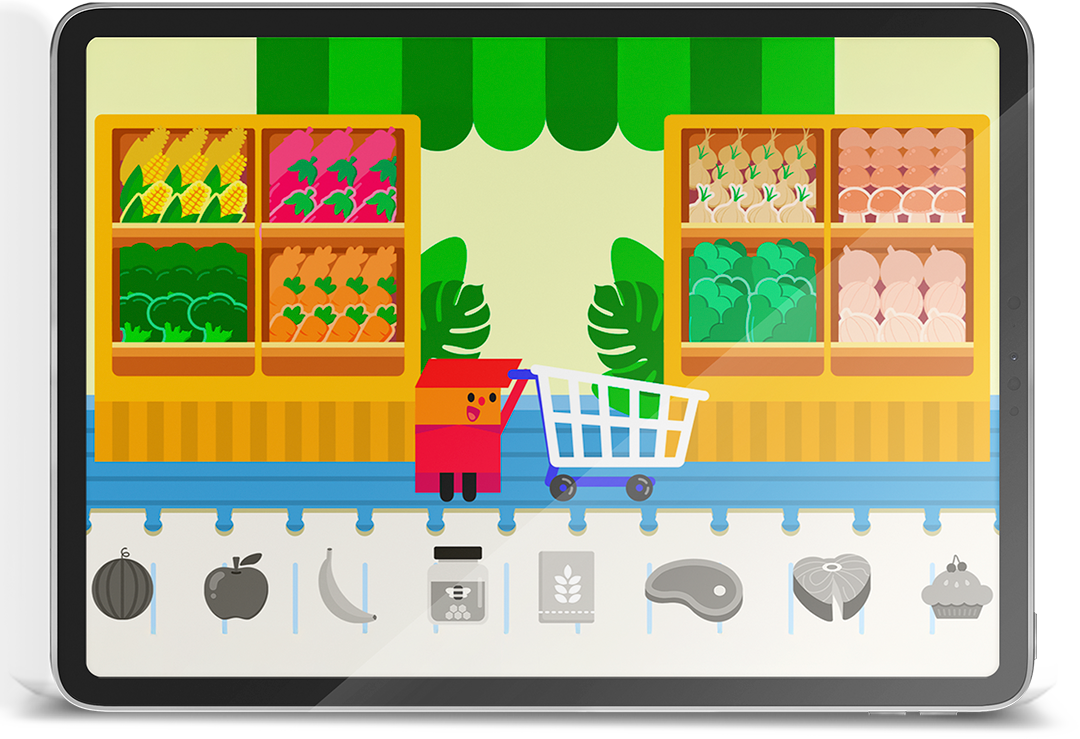
Personalization is key to learning
Although video games were shown to have an overall positive impact on children with ADHD, the study emphasizes that there is no one-size-fits-all approach. Some children performed better with traditional methods, as these more structured and predictable activities were better aligned with their learning style. On the other hand, others benefited greatly from video games, especially those designed with relaxing themes or those that required greater cognitive effort.
“The key is to personalize the approach, adapting the tools to the individual needs of each child,” our analysis concludes.
This reinforces the importance of assessing each child’s preferences, strengths, and needs before choosing a method. Combining techniques, integrating video games and traditional methods according to each child’s characteristics, may be the most effective strategy for promoting their comprehensive development.
Tools such as Kokoro Schools are essential for personalizing learning through play, as they offer experiences tailored to each child’s needs. By using educational video games that take into account individual pace and preferences, these platforms allow activities to be tailored to each student’s cognitive, emotional, and attention needs. This facilitates a more flexible and effective approach, promoting more inclusive and motivating learning, especially for children with ADHD, where personalization can make all the difference in the success of the educational process.
Would you like to create a session at Kokoro Schools just like the one at the studio?

If you would like more information about participating in other research studies, please do not hesitate to contact our educational psychology department at info@lernin.com. We will be happy to advise you and offer you the support you need to integrate our solutions into your professional work.


